A sock labeled 10-13 is not a shoe size, and it is not a length in inches. It is a stretch range, and in most men's socks it covers US shoe sizes 8 through 12. That single line on the package explains why so many men end up with the wrong pair: men's socks are sold in two sizing systems, letters and numbers, and neither of them matches the size printed inside the shoe.
The short answer first. A US men's shoe size of 7 to 9.5 is almost always a medium in letter sizes and comfortably inside a numeric 10-13. A shoe size of 10 to 12.5 is a large. Size 13 and up moves you to extra large, or to a numeric 13-15. Height, cushioning and fiber change how that size feels once it is on, but they do not change which size you should pick.
Men's Sock Size Chart: Letters, Numbers and Shoe Sizes
Most manufacturers grade a men's line from the same base ranges. The edges shift by about half a shoe size between brands, so treat the chart below as a starting point and confirm it against the product page before ordering.
Approximate conversions for men's sock sizes. Brand charts vary by roughly half a shoe size, and a thicker knit can shift the fit further.
| Sock size |
US men's shoe |
UK shoe |
EU shoe |
Foot length |
| Small |
4 to 6.5 |
3 to 5.5 |
36 to 38 |
22 to 24 cm |
| Medium |
7 to 9.5 |
6 to 8.5 |
39 to 42 |
24.5 to 26.5 cm |
| Large |
10 to 12.5 |
9 to 11.5 |
42 to 45 |
27 to 29 cm |
| Extra large |
13 to 15 |
12 to 14 |
46 to 48 |
29.5 to 31.5 cm |
Numeric sizing works on a different principle. A sock marked 10-13 is knitted on a form that stretches to cover shoe sizes 8 to 12, while a 13-15 covers roughly 12 to 15. Athletic and work socks lean on numeric sizes because one pair serves a wide spread of men and keeps the number of items a retailer has to stock under control. The trade off is precision: a man at the bottom of a 10-13 gets a looser cuff than a man at the top of the same range.
You will also see one size fits most on low-cut and gift socks. In men's socks that usually means a stretch range of about US 6 to 12, and it works best on average-width feet. At either end of the scale, a graded size fits better.
Why Men's Sock Sizes Are Ranges Instead of Single Numbers
A sock leg is a knitted tube, and a knitted tube stretches. That is why one pair can honestly claim four shoe sizes. A men's medium is knitted about 21 to 23 cm long when laid flat, while the foot it covers is 24.5 to 26.5 cm. The difference is taken up by the structure of the knit and by the elastane blended into the yarn, usually 2 to 5 percent in the cuff and 1 to 3 percent through the body.
Two things follow from that. The same size can fit two men with very different feet, as long as both feet sit inside the range. And the fit drifts over time, because cotton-rich knits can move by 3 to 5 percent after the first hot washes, which is enough to turn a comfortable pair tight around the ankle. Practical steps for protecting the size you paid for are set out in our care and maintenance notes for men's round mouth ship socks.
Sock Height Is a Separate Decision From Sock Size
Two pairs can both be a size large and sit completely differently on the leg. Height, not size, decides where the cuff lands, and that is the difference men notice first.
- No-show and boat socks sit below the ankle bone with roughly 4 to 6 cm of fabric, and stay in place through a silicone heel grip or a firm elastic mouth.
- Ankle and quarter socks cover the ankle bone and add a small heel tab, which is the style that suits most trainers.
- Crew and mid-length socks reach 15 to 20 cm above the heel and are the default for business and everyday wear.
- Knee-high and long socks run to just below the knee, common in football and formal dress.
- Over-the-calf socks cover the calf entirely, which is what compression and travel socks need.
Height changes perceived fit because the cuff is what holds a sock in place. A large crew sock has a wider opening than a large no-show sock, simply because it has to pass over the calf and stay there. Wider calves push a man toward the top of a size range or toward a cuff with more elastane.
Our men's sock range covers all five heights, so the same size letter can be compared across styles before you decide. The men's mid-length lopped socks, for example, are a crew-height pair built with a relaxed cuff and a heat-storage loop back for autumn and winter wear.
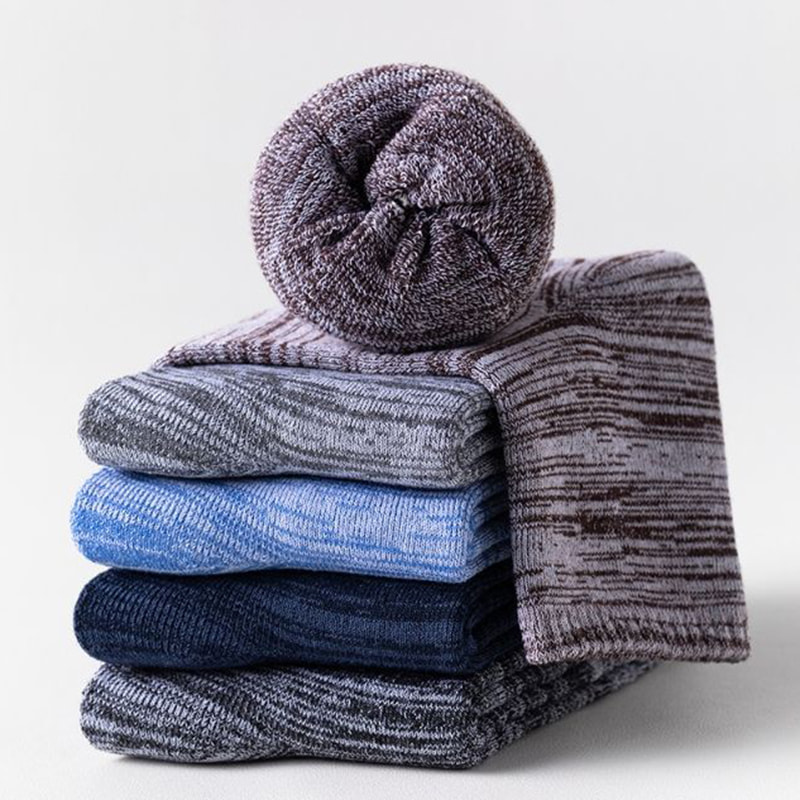 Thickened Warm and Heat Storage Looped SocksThe biggest feature of looped socks is their thick looped layer, which can effectively lock in temperature and reduce heat loss. The surface of the looped layer is cov...View Product →
Fiber and Knit Density Change How a Size Feels
Size sets the range; fiber and knit set the feel inside it. A cushioned terry-loop sports sock takes up more volume inside the shoe than a flat-knit dress sock, so both can be a medium and one will feel half a size tighter. For hiking socks and winter boots, the usual advice is to take the larger size or to keep a half size of room in the shoe.
Yarn matters in the same way. Combed cotton gives a dense, smooth surface with little lint and holds its shape across 30 to 40 washes. Wool blends insulate and breathe but relax slightly with wear. Mesh panels stretch more easily because the knit has openings, which helps on a narrow foot.
Needle count sets the density. A 144-needle or 168-needle cylinder produces a bulkier, stretchier sock that suits sport and home wear, while a 200-needle machine produces a finer surface with less stretch, which is why thin business socks are knitted that way. A plain combed cotton men's short sock for spring and autumn sits in the middle of that range and feels true to its labeled size.
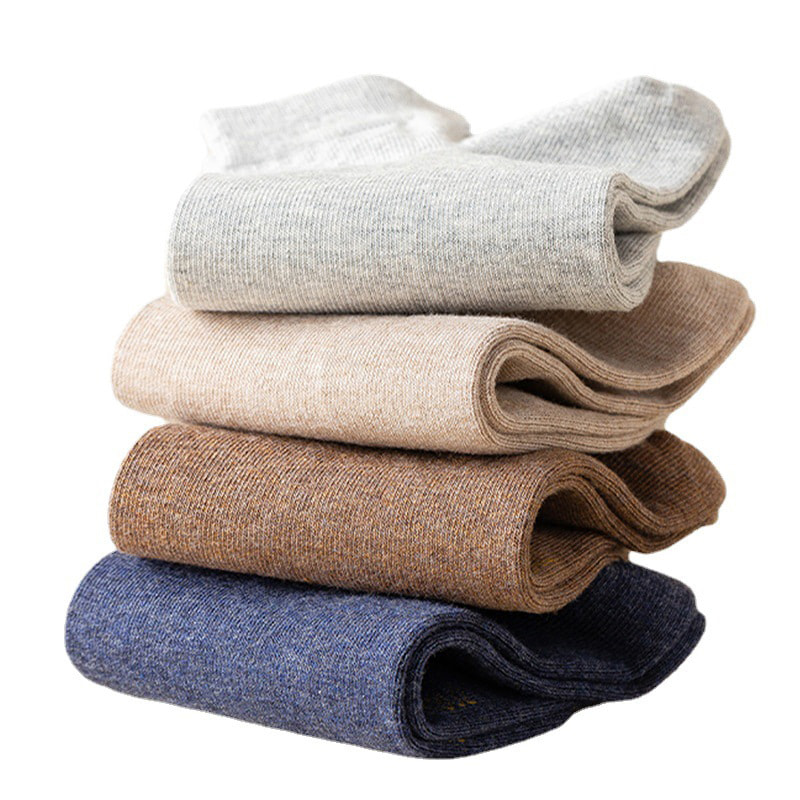 Spring and Autumn Combed Cotton Solid Color Men's SocksCombed cotton undergoes special processing to remove short fibers and impurities from cotton fibers, making the fabric more delicate, soft, and comfortable to the touc...View Product →
How Men's Sock Sizes Are Set on the Production Line
For anyone buying in quantity, the letter on the label matters less than the numbers behind it. A factory spec for a men's line usually covers five points.
- Foot length, measured heel to toe in centimeters and graded in 1 cm steps.
- Flat foot width after the sock has relaxed for 24 hours, often 8 to 10 cm for a men's medium.
- Cuff stretch, tested to a target circumference under a fixed load, commonly 30 to 38 cm stretched.
- Shrinkage after wash, held to about 3 to 5 percent for cotton-rich knits and less for blends.
- Market labeling, since one pack may need US, UK and EU ranges printed together.
The commercial risk is easy to see: two suppliers can both ship a sock marked 10-13 and deliver different fits, because one grades the cuff to a shoe 8 and the other starts at a shoe 9. Ask for flat measurements, the elastane percentage in the cuff and a wash test before a repeat order. Those three numbers explain most complaints about socks that slip, sag or feel tight after a month.
Men's Sock Size Questions We Hear Most
What sock size fits a men's shoe size 10?
A shoe size 10 sits in the middle of the men's large range and inside a numeric 10-13. If you are choosing between medium and large in a cotton-rich knit, take the large.
What should I do if I am between two sock sizes?
Check the fiber before the chart. Cotton and cotton-rich knits shrink slightly after the first washes, so size up. Wool relaxes with wear, so a snug starting fit is fine. In compression and ski socks, a close fit is part of the function, and the smaller size is usually correct.
Do men's and women's socks share the same size scale?
No. A women's sock of the same letter is knitted smaller, roughly two shoe sizes down, because a women's US shoe size is about 1.5 sizes above a men's. A women's medium is close to a men's small.
Do socks shrink in the wash?
Yes, and the first wash is the risky one. Hot water and a hot dryer can pull a cotton sock in by 3 to 5 percent, which is about a half shoe size of comfort. Cold water and air drying keep the knit close to its labeled range.
How do I measure my foot for socks?
Stand on a sheet of paper with your heel against a wall, mark the tip of your longest toe and measure the distance in centimeters. Measure both feet, use the longer one, and match the result to the foot length column in the chart above.
The order of decisions is what keeps this simple. Match your shoe size to the letter or numeric range first, then choose the height that suits the shoe and the season, then use fiber and knit density to fine-tune the feel. A man who wears a US 10 shoe and buys a large crew sock in combed cotton has answered the size question before he looks at the price.
Buyers can work the same way from the other end. Ask the supplier for the flat measurement, the cuff stretch target and the wash test result for each size, and compare those numbers rather than the label. BoLong Socks grades men's boat, short, mid-length and long styles from one measurement system, so a size large ordered across several styles arrives within a single grading standard.
If you want a starting point, the men's round mouth ship socks set shows how a low-cut style is sized and finished for everyday wear.
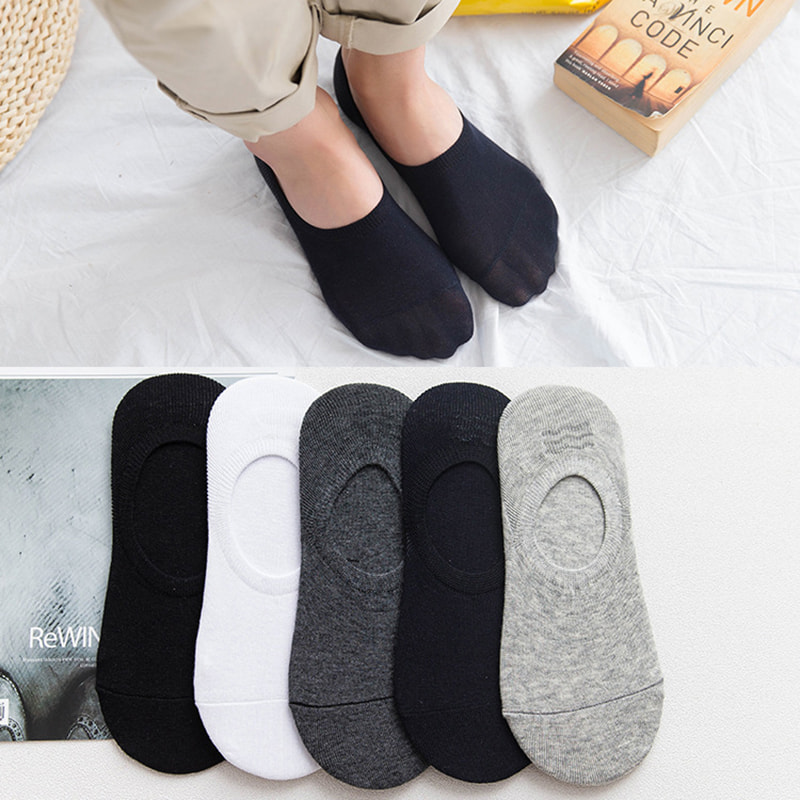 Men's Round Mouth Ship Socks SetThe round mouth design closely fits the ankle, avoiding slipping and reducing friction and discomfort. Made of soft materials to reduce skin irritation and enhance the...View Product →


